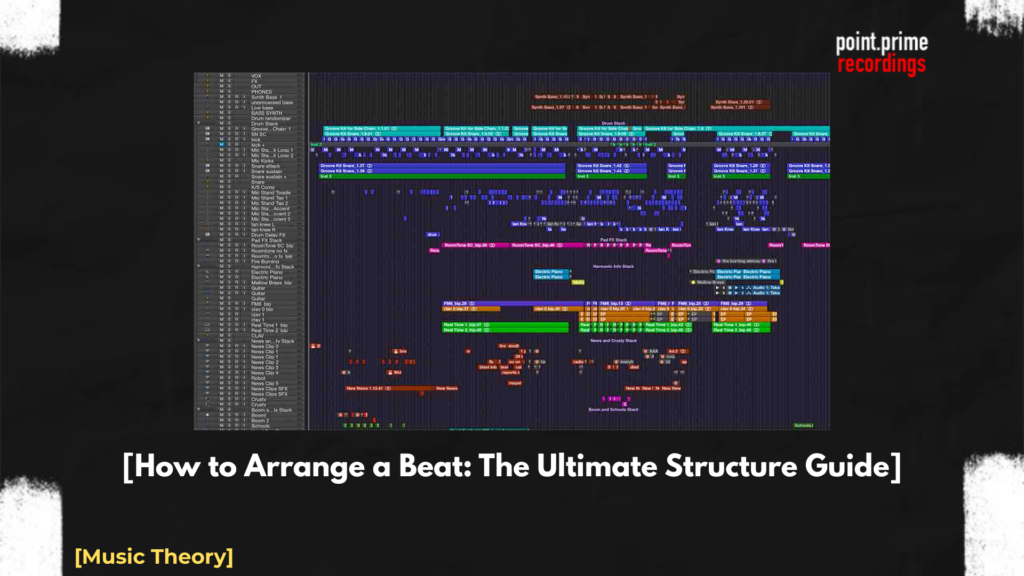
How to Arrange a Beat: The Ultimate Structure Guide (2026)
Quick Answer / TL;DR: Beat arrangement organizes a static 8-bar loop into a dynamic 3-minute song structure. Producers achieve this utilizing the subtractive arrangement method: building the maximum energy section (the Chorus), duplicating that block across a 60-100 bar timeline, and utilizing the Mute Tool to carve out the Intro, Verses, and Bridges. This top-down workflow prevents creative block and guarantees consistent rhythmic contrast throughout the track.
Introduction
Many producers struggle to transition an excellent 8-bar loop into a finished, release-ready track. Structuring instrumentals requires mathematical precision, dynamic contrast, and logical progression. This manual details the subtractive arrangement workflow, standard hip-hop and electronic frameworks, and advanced energy automation techniques optimized for modern production environments.
Key Takeaways of the Article
- The Subtractive Method: Building the climax first and muting elements is 3x faster than linear left-to-right sequencing.
- Standard Hip-Hop Framework: Modern arrangements require 16-bar verses and 8-bar choruses to align with vocalist expectations.
- Energy Management: Track intensity must fluctuate strategically between a 3/10 (Intro) and a 10/10 (Chorus) to retain listener attention.
- Frequency Allocation: Proper arrangement acts as a natural equalizer, preventing frequency masking before the mixing stage begins.
The “Loopitis” Trap: Why Producers Get Stuck
Beginner beatmakers often create a dense, perfectly mixed 8-bar loop and subsequently hit a creative wall. This phenomenon, known in the industry as “loopitis,” occurs because producers attempt to build tracks linearly from the first second to the last. Professional producers bypass this paralysis by finalizing the climax first. When the densest section is complete, the producer simply deconstructs the loop to generate the remaining song sections.
Intro
Before dissecting the timeline, producers must understand the universal blueprint that A&R executives and recording artists expect.
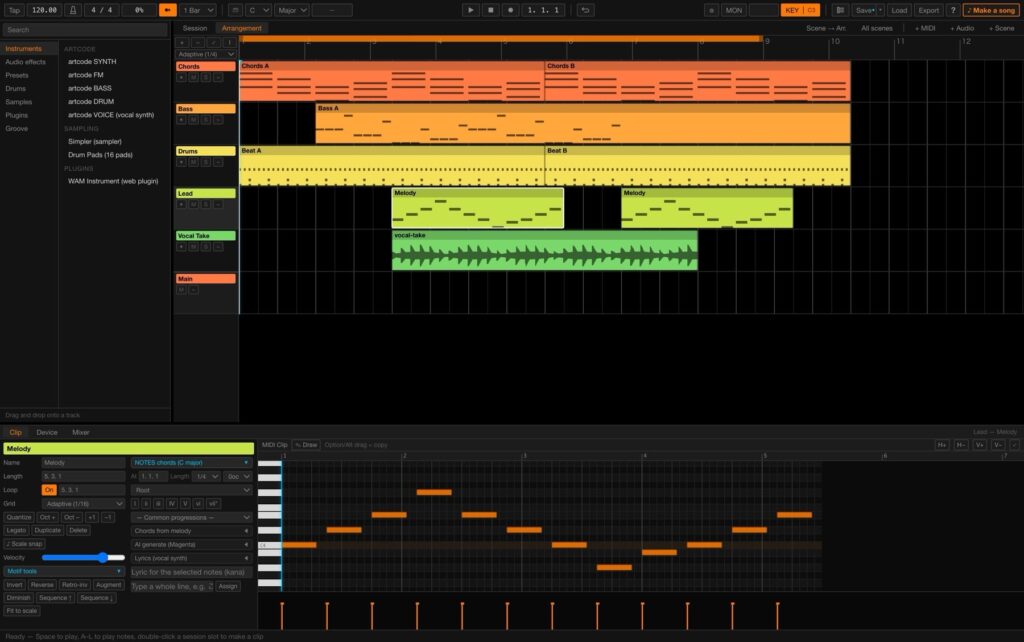
The Standard Beat Arrangement Blueprint (Data Matrix Table)
| Section | Bar Count | Energy Level (1-10) | Primary Function |
| Intro | 4 to 8 Bars | 3/10 | Establishes the melodic motif and tempo. |
| Verse 1 | 16 Bars | 5/10 | Provides sparse instrumentation for vocal clarity. |
| Pre-Chorus | 4 to 8 Bars | 7/10 | Builds tension using risers and high-pass filters. |
| Chorus 1 | 8 Bars | 10/10 | Delivers maximum impact with all stems active. |
| Verse 2 | 16 Bars | 6/10 | Reintroduces the groove with slight rhythmic variations. |
| Chorus 2 | 8 Bars | 10/10 | Repeats the primary hook for maximum retention. |
| Bridge | 8 Bars | 4/10 | Introduces a contrasting chord progression or rhythm. |
| Chorus 3 | 8 Bars | 10/10 | Provides the final, highest-energy climax. |
| Outro | 4 to 8 Bars | 2/10 | Fades out the instrumental naturally. |
If you want to skip the manual math and instantly map out your timeline, use our interactive song arrangement generator to build a custom blueprint tailored to your specific tempo and genre.
Step-by-Step: The Subtractive Arrangement Method
Step 1: Build the “Climax” Loop
The producer must first create the busiest section of the track (the Chorus). Add the kick drum, snare, hi-hats, 808 bass, primary synth leads, and background percussion into a single 8-bar block on the Grid.
If you are struggling to establish the emotional foundation of your main loop before arranging, utilize a free chord progression generator to lay down your initial MIDI chords and synth pads.
Before arranging, ensure your 8-bar loop is perfectly leveled. Reference a volume balancing cheat sheet to set your anchor points.
Step 2: Duplicate Across the Timeline
Highlight the completed 8-bar loop. Use the DAW’s duplicate function to paste the block across the timeline until the session reaches 72 to 80 bars in length.
For producers managing massive stem exports post-arrangement, command-line interfaces provide efficient batch processing. Employ a monospaced font for command-line examples when automating audio conversions:
ffmpeg -i arranged_mixdown.wav -c:a pcm_s16le -ar 44100 final_master.wav
Step 3: Carve Out the Verses and Intro (Muting)
Select the Mute Tool. Delete or mute the kick drum and heavy 808 bass from the first 8 bars to create the Intro. Next, remove the dominant synth lead and crash cymbals from bars 9-24. This subtraction automatically carves out a sparse, vocal-ready Verse.
Breaking Down the Core Sections
The Intro (Setting the Mood)
The Intro spans 4 to 8 bars and establishes the harmonic minor or major scale of the beat. Producers typically isolate the primary piano or synth progression here, filtering out the low-end frequencies using an EQ to ensure the incoming bassline hits harder.
The Verse (Leaving Room for the Artist)
Spanning 16 bars, the Verse requires restraint. As expert audio engineers frequently note, “Arrangement is the most powerful EQ.” The producer must strip back high-frequency synths and aggressive percussion. The recording artist’s vocal takes absolute priority in this space.
The Chorus (The Maximum Impact)
The Chorus spans 8 bars and reintroduces all muted layers. The kick drum, heavy basslines, and wide stereo melodies play simultaneously. When creating promotional video content for beat stores, demonstrating the full track chorus directly—rather than step-by-step live construction—retains immediate listener attention and drives higher conversion rates.
Pro Tips for Cinematic & Heavy Beat Arrangement
When producing heavy cinematic beats or industrial metal-infused instrumentals using hardware like the Native Instruments Maschine MK3, physical velocity mapping adds necessary humanized dynamics to synthetic orchestral layers.
The “Drop” and Silence
Absolute silence amplifies incoming transient impact. Mute all audio tracks exactly one beat before the Chorus drop. This fractional second of dead air tricks the human ear, making the subsequent 808 bass hit feel significantly heavier.
Energy Automation (Risers & Fills)
Static loops fatigue the listener. To maintain momentum:
- Insert a 1-bar drum fill at the end of every 16-bar phrase.
- Automate volume risers to transition smoothly between the Pre-Chorus and the Chorus.
- Introduce a distinct crash cymbal on the first downbeat of every new 8-bar section.
Layer Density by Section Table
| Section | Low-End (Bass/Kick) | Mid-Range (Keys/Synths) | High-End (Hats/Perc) |
| Intro | Filtered / Absent | Active | Sparse |
| Verse | Active | Minimal | Active |
| Chorus | Maximum Saturation | Maximum Width | Maximum Density |
Conclusion
Mastering how to arrange a beat transforms a producer from a loop-maker into a complete songwriter. By leveraging the subtractive arrangement method within professional DAWs like Logic Pro or Reaper, producers can effortlessly translate 8-bar ideas into structured, dynamic, and artist-ready instrumentals.
💡 Producer’s Note: Need a reference for how a massive cinematic beat is structured? Explore the Point Prime Recordings Shop to hear professionally arranged, heavy, and atmospheric instrumentals ready for your vocals.