High Pass vs Low Pass Filters: The Ultimate EQ Guide (HPF vs LPF)
The equalizer (EQ) is the most powerful tool for shaping tone. However, for beginners, the terminology can be notoriously counterintuitive. When an engineer engages a High Pass Filter, they are often trying to fix the low end. When they engage a Low Pass Filter, they are addressing the treble.
This confusion regarding high pass vs low pass naming conventions often leads to mixing mistakes. Understanding the difference between low pass and high pass filter functions is the first step toward mastering subtractive EQ—the art of removing unwanted frequencies to create clarity.
This guide provides a definitive technical explanation of hpf vs lpf, visualizes their slopes, and outlines the best practices for using low pass and high pass filters in a modern mix.
Introduction
Before diving into the mechanics, it is essential to establish the context. Both lpf and hpf filters are forms of Subtractive Equalization. Unlike a “bell” or “shelf” curve which is often used to boost frequencies, pass filters are almost exclusively used to cut (attenuate) signal.
This debate is not about which one is better; they serve opposite functions. They are the gatekeepers of the frequency spectrum, determining the bandwidth limits of a specific sound.
The Golden Rule of Naming (How to Remember)
The primary source of confusion in terminology of these two techniques is that the names describe what they keep, not what they remove.
To instantly recall the difference, memorize this golden rule: “Pass” means “Go Through.”
- High Pass (HPF): The Highs Pass through. (Therefore, it cuts the Lows).
- Low Pass (LPF): The Lows Pass through. (Therefore, it cuts the Highs).
Think of the filter as a bouncer at a club. A high pass filter is a bouncer that only lets high frequencies enter the club, blocking the low frequencies at the door. Conversely, a low pass filter only admits the low frequencies.
What is a High Pass Filter (HPF)?
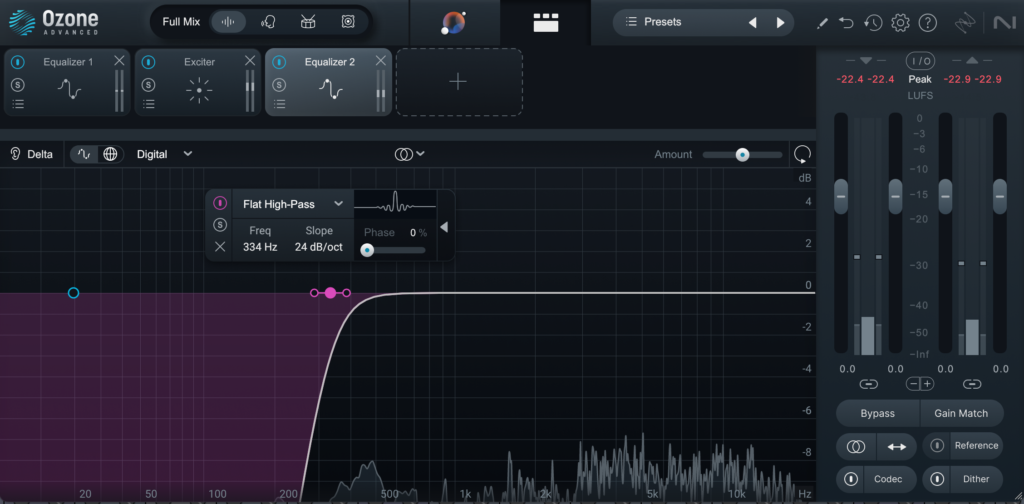
A High Pass Filter (HPF) allows frequencies above a specific cutoff point to pass through while attenuating frequencies below that point. In some DAWs and analog gear, this is also referred to as a Low Cut Filter. These two terms—high pass and Low Cut—are synonymous.
Visualizing the Curve
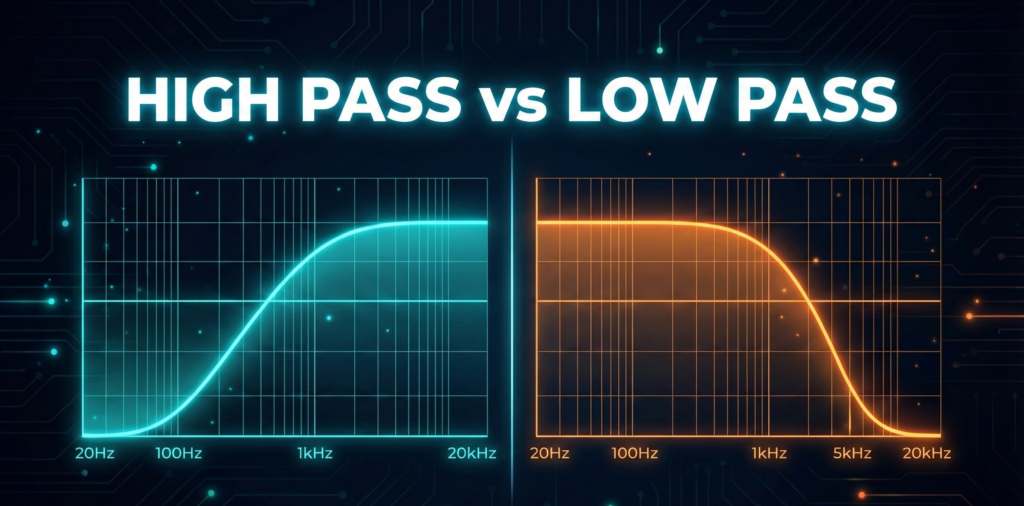
On an EQ graph, a HPF looks like a slope rising from the bottom left to the top right. It creates a “cliff” on the left side of the spectrum.
When to Use HPF
The high pass filter is the most commonly used tool in mixing. It is essential for cleaning up “mud.”
- Vocals: Human voices rarely have useful energy below 80Hz. Applying an HPF at 80Hz – 100Hz removes microphone rumble and plosives without affecting the tone.
- Hi-Hats and Cymbals: These instruments live in the treble range. An HPF set to 300Hz or even 500Hz removes bleed from the kick and snare.
- Guitars: Electric guitars can conflict with the bass guitar. High passing guitars at 100Hz clarifies the low-end.
What is a Low Pass Filter (LPF)?
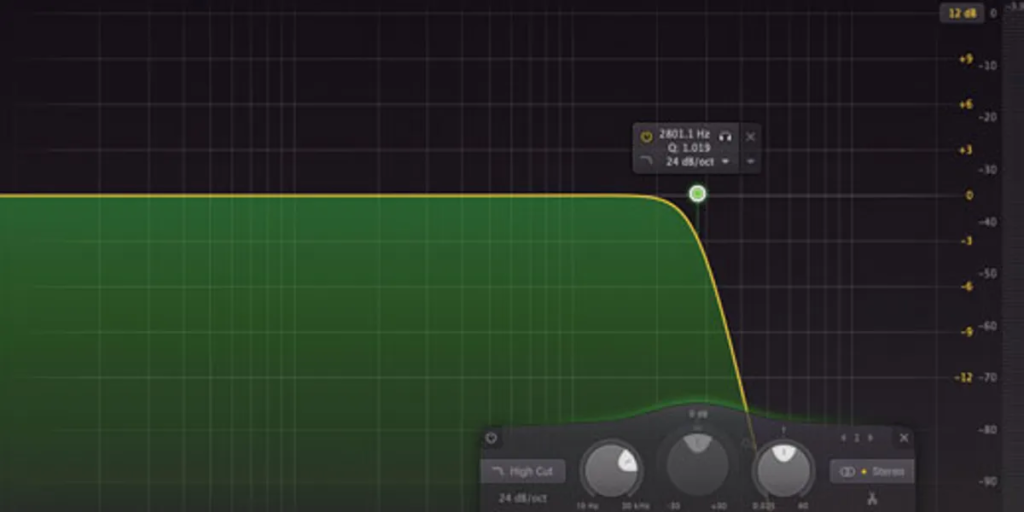
A Low Pass Filter (LPF) allows frequencies below a specific cutoff point to pass through while attenuating frequencies above that point. It is also known as a High Cut Filter.
Low Pass Filter Definition
Technically, the low pass filter definition is a circuit or algorithm that offers easy passage to low-frequency signals and difficult passage to high-frequency signals.
Visualizing the Curve
On an EQ graph, a low pass curve looks like a slope falling from the top left to the bottom right. It creates a ceiling on the right side of the spectrum.
When to Use LPF
While less common than HPF, the low pass filter is vital for creating depth and warmth.
- Bass Guitar: To give the vocals space, engineers often LPF the bass guitar around 5kHz – 7kHz to remove string noise and clicks.
- Synthesizers: Bright digital synths can sound harsh. An LPF softens the sound, pushing the synth further back in the mix.
- Reverb: Unfiltered reverb can sound metallic. Applying a low pass filter to the reverb return makes the space sound more natural and dark.
Stuck on a melody?
Don’t let writer’s block slow down your session. Use our free Chord Progression Generator to create emotional harmonies and complex voicings. A perfect starting point for your next track.
HPF vs LPF: Visualizing the Slopes
In comparison, the behavior, one must understand the “Slope” or “Roll-off.” This determines how aggressively the filter cuts the sound.
The slope is measured in Decibels per Octave (dB/oct).
- 6dB/oct: A very gentle, musical slope.
- 12dB/oct: The standard slope on most analog consoles.
- 24dB/oct: A steep, surgical slope used for precise separation.
[Image: Side-by-side comparison of High Pass and Low Pass curves on a frequency spectrum]
Resonance (Q)
Both high pass and low pass filters often feature a “Resonance” or “Q” control. Increasing the Q at the cutoff point creates a volume spike just before the filter drops off. This is the secret behind the “sweeping” sound in electronic music filters.
Band Pass Filter (Combining Both)
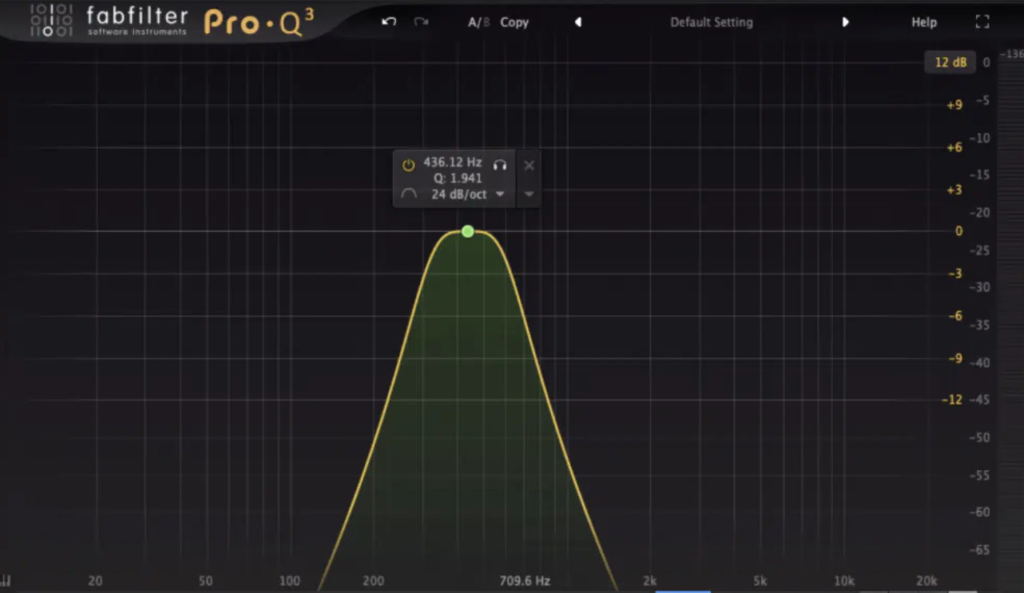
What happens when you combine a low pass filter and high pass filter on the same track? You create a Band Pass Filter.
By bringing the HPF up from the bottom and the LPF down from the top, you isolate a specific “band” of frequencies in the middle.
- Telephone Effect: To make a vocal sound like it is coming through a telephone, use a high pass at 400Hz and a low pass at 4kHz.
- Focus: This combination is used to fit instruments into very narrow pockets of the mix.
Using a low pass filter along with a high pass filter is an aggressive technique, often used for special effects rather than general balancing.
Practical Mixing Mistakes (Do’s and Don’ts)
Understanding the distinction of these two terms is only half the battle. Knowing when not to use them is equally important.
Don’t: High Pass Everything
A common amateur mistake is to put an HPF on every single track “just to be safe.” This results in a thin, sterile mix that lacks body and warmth. Only use a high pass filter if there is audible low-frequency noise.
Do: Use Filters on Effects (Abbey Road Trick)
The “Abbey Road” reverb trick involves placing both a low pass and high pass filter on the reverb bus (High Pass at 600Hz, Low Pass at 10kHz). This ensures the reverb acts only on the mid-range, preventing the mix from becoming muddy or shrill.
Don’t: LPF Lead Vocals Aggressively
Unless you are aiming for a muffled effect, be careful with low pass and high pass settings on lead vocals. Cutting the highs below 10kHz removes the “air” and breathiness that makes a vocal sound expensive and intimate.
Conclusion
The equalizer is the sculptor’s chisel, and filters are the primary way to remove large chunks of unneeded material. The high pass low pass filter dynamic is the foundation of creating space in a mix.
- Use the High Pass Filter (HPF) to remove rumble and clarify the low end.
- Use the Low Pass Filter (LPF) to remove harshness and push sounds back in depth.
By mastering the lowpass and highpass concepts and adhering to the “Pass means Go Through” rule, you can prevent frequency masking and achieve a professional, separated sound.
FAQ
A High Pass Filter allows high frequencies to pass (cutting the lows). A Low Pass Filter allows low frequencies to pass (cutting the highs). They work at opposite ends of the frequency spectrum.
Yes. High Pass and Low Cut are two names for the exact same tool. They describe the same action from different perspectives.
In mastering, lpf and hpf filters are used very conservatively (usually with gentle 6dB or 12dB slopes) to tighten the extreme sub-bass (below 30Hz) and remove ultrasonic noise (above 20kHz).
Yes. Using both low pass and high pass filters on a single sound creates a “Band Pass” filter, isolating only the middle frequencies.